Wednesday, 17 July 2013

Modelling the change from rural to urban

This essay is about software, not the real world! If you're interested in my thoughts on real world rural policy issues, check the Rural Policy category on the right.

In the real world - in Northern Britain particularly, but I think this holds for many other places - there are three essential layouts of rural communities:

  • Non-nucleated settlements, where dwellings are scattered at least tens of metres apart over quite a wide area; highland crofting settlements are typically of this form.
  • Nucleated settlements, where dwellings are grouped closely around a central feature such as a village green or a pond; villages of this form are typically older villages, especially in areas of Anglian settlement. Rhonehouse is a good example locally.
  • Linear settlements, which are a special case of nucleated settlements, where dwellings line the sides of an (often broad) street. These settlements typically are medieval in origin and reflect the runrig agricultural pattern - each house had inbye land stretching back from the street. Moffat, Lochmaben and Thornhill are local examples.

Stamfordham, Northumberland: a typical nucleated settlement centred around a village green. Field boundaries to the north give clear evidence of runrig agriculture, while the south side shows the growth of closes and alleys.
In nucleated settlements generally, as the settlement grows, alleys and lanes form stretching out from the original grouping. Edinburgh's old town is an example of a linear settlement which grew in this way. Older, unplanned rural settlements do not have a regular street plan - that's a feature of quite advanced urban societies.

In creating a mechanism for settling a convincing, naturalistic virtual world, these patterns need to be born in mind. This is complicated by a number of issues which are driven by technology (and perhaps by my lack of skill and imagination); I want to avoid as far as possible technological issues introducing visible artefacts into the virtual world.

Currently I'm working on a grid of 100 metre square cells. This isn't ideal at all, but it's simple and at the stage I'm at in developing algorithms that simplicity helps. But naturally, things people build are not always square and certainly not always aligned to a north/south grid.

Dunvegan, Skye, a non-nucleated settlement. Dwellings are set on their individual crofts, scattered across the landscape.
From the point of view of settling farmers, a 100 metre square grid - one hectare to a cell - is adequate; I'm working on the principle that my sort of roughly bronze-age to late medieval farmers can manage between four and six hectares per household. As farmers will naturally cluster together in areas with better soil fertility and shallower gradients, and so that 'naturally' models the non-nucleated settlement. Within any non-urban holding, the dwelling house should gravitate to the edge of the holding nearest other dwelling houses - a gravitational algorithm is precisely right to do this. This will provide the beginnings of clustering.

As you'll see in my note on Populating a game world, when a non-nucleated settlement of farmers reaches a certain size, it begins to attract craftsmen. Among the first of these is an innkeeper; to support an innkeeper requires ten other actors dwelling within walking distance (say a ten cell - one kilometre - radius). When an innkeeper settles, he reserves a set of four to six cells, close to sufficient potential customers, and ideally adjacent to a cell already designated as road.

One of these cells becomes the inn yard, where the inn and its outbuildings are sited. One adjoining the inn yard becomes 'urban open space', which can't be built on - it's rendered as a village green until the village reaches a certain size, then paved square. If possible the 'urban open space' cell will be placed to border both the inn yard cell and a cell designated as 'road'. Other cells from the farm are designated as 'urban'.

Similarly, when an aristocrat settles, he will reserve one cell for his castle, one for a 'market place', and four more as urban; a market place will subclass an urban open space and so will prefer to be located adjacent to an existing road. The castle will normally be on a hilltop, except where there is a river crossing, which would be a preferred site.

There's probably some algorithm I could find which would lay out wee twisty streets and arterial roads in a naturalistic fashion... If cells which are designated 'road' adjoining 'urban' cells get redesignated as 'arterial', that's probably a good first step. Arterial cells have dwelling plots lined either side of a broad street, and one lane off either side. An arterial cell alongside an 'urban open space' may have no dwellings on the side towards the 'urban open space', giving in effect of a larger urban open space. Land use types 'urban open space', 'arterial' and possibly others will subclass 'urban', or share a common interface.

Kirkinner, Wigtownshire: a linear settlement.
A settlement with mainly arterial cells should give a fairly good model of a linear settlement.

As a tweak, it's possible that urban cells adjacent to water cells could become dock cells.

A number of pre-planned (that is, designed) ground plans will be created for 'urban' cells, such that they will tessellate together to give an impression of irregularity. Urban cells have up to twelve dwellings per cell. Dwellings in urban (and arterial and 'city wall' cells, see below) are erected in preplanned locations within the ground plan - generally, facing the most significant street which abuts the plot.

Although urban cells have plots for twelve dwellings, they won't automatically be occupied. Rather, a new craftsman setting up shop will occupy a free plot in an existing urban cell, and will only create a new urban cell if there are no free plots available. In selecting a plot, the available plot with most occupied neighbours will be chosen.

Where more than a critical number - say 15 - urban cells are clustered together, the outermost will become 'town wall' cells. An outermost arterial cell will become a 'town gate' cell. Again, preplanned ground plans for 'city wall' cells will be created, with wall models. These will be designed to fit together in ways which are not obviously square and grid-aligned.

There is a slight problem with this which is that to get to town wall status would take at least 180 households, which is quite a lot for my game economy; this implies walled towns will be relatively uncommon, which is fair enough. However if, as a slight fudge, journeymen and soldiers each have their own dwelling instead of living in their employers' dwelling, the number of households will grow faster.

Buildings in urban cells will just be genetic buildings like anywhere else, except that the fact of being in an urban cell should give an emphasis to building upward. Arterial cells will promote taller buildings even more strongly than other urban cells.


Saturday, 6 July 2013

Populating a game world

(You might want to read this essay in conjunction with my older essay, Settling a game world, which covers similar ground but which this hopefully advances on)

For an economy to work people have to be able to move between occupations to fill economic niches. In steady state, non player character (NPC) males become adult as 'vagrants', and then move through the state transitions described in this document. The pattern for females is different.

Basic occupations

The following are 'unskilled' occupations which form the base of the occupation system. Generally a male character at maturity becomes a 'Vagrant' and wanders though the world until he encounters a condition which allows him to advance up the occupation graph. If an occupation wholly fails, the character can revert to being a 'Vagrant' and start again.


Occupation Dwelling condition New trade Notes
Vagrant None land available and animals available Herdsman
Vagrant None arable land available Farmer See crops
Vagrant None has weapons Outlaw
Herdsman None Insufficient food Vagrant
Farmer Farm Insufficient food Vagrant
Outlaw None loses weapons Vagrant
Vagrant None craftsman willing to take on apprentice Apprentice
Herdsman None arable land available Farmer
Outlaw None Battle hardened OutlawLeader
Apprentice (craftsman's) Qualified Journeyman
Journeyman None Unserviced customers available Craftsman See crafts
Craftsman See crafts Too few customers Journeyman
Journeyman None arable land available Farmer
Vagrant None Lord with vacancies available Soldier See military
OutlawLeader None Unprotected farms available Laird See nobility

Gender dimorphism

In the paragraph above I said 'a male character'. It may seem unfair to create a game world in which the sexual inequality of the real world is carried over, and for that reason it seems sensible that female children should have the same opportunities as male children. But games work on conflicts and injustices, and so it seems reasonable to me to have a completely different occupation graph for women. I haven't yet drawn that up.

Wandering

Vagrants wander in a fairly random way. While vagrants are wandering they are assumed to live off the land and require no resources. Solitary outlaws similarly wander until they find a leader, although they will avoid the areas protected by nobles. Herdsmen also wander but only over unenclosed pasture. They visit markets, if available, periodically; otherwise, they live off their herds. Journeymen wander from market to market, but are assumed to trade skills with farmers along the way.

Crafts

Crafts are occupations which require acquired skills. In the initial seeding of the game world there are probably 'pioneers', who are special vagrants who, on encountering the conditions for a particular craft to thrive, instantly become masters of that craft.

Craft Dwelling Supplies Perishable? Customer types Needs market? Customers Supplier Suppliers Recruits
Solo Per journeyman Per apprentice

Min Max Min Max Min Max
Smith Forge Metal Items no Farmer, Soldier No 6 10 4 6 1 3 Miner 1 Vagrant
Baker Bakery Bread yes All NPCs No 20 30 12 18 6 10 Miller 1 Vagrant
Miller Mill Flour, meal no Baker, Innkeeper No 2 3 1 2 1 1 Farmer 6 Vagrant
Weaver Weaver's house Cloth no All NPCs Yes 6 10 4 6 1 3 Herdsman 2 Vagrant
Innkeeper Inn Food, hospitality yes Merhant, Soldier, Farmer, Lord No 10 20 5 10 2 4 Farmer,Herdsman 2 Vagrant
Miner Mine Ores no Smith Yes 2 3 1 2 1 1 Farmer 1 Vagrant
Butcher Butchery Meat yes All NPCs No 10 20 4 8 2 4 Farmer, Herdsman 2 Vagrant
Merchant Townhouse Transport, logistics n/a Craftsmen, nobility Yes 10 20 4 8 2 4 n/a n/a Vagrant
Banker Bank Financial services yes Merchant Yes 10 20 4 8 2 4 n/a n/a Merchant
Scholar Academy Knowledge n/a Ariston, Tyrranos, General, Banker No 1 4 1 2 0.25 0.5 n/a n/a Vagrant
Priest Temple Religion n/a All NPCs No 50 100


Scholar
Chancellor Chancellory Administration n/a Ariston, Tyrranos No 1 1 0 0 0 0

Scholar
Lawyer Townhouse Legal services n/a Ariston, Merchant, Banker No 4 6 2 3 1 2

Scholar
Magus Townhouse Magic n/a Tyrranos, General No 3 4 1 2 0.25 0.5

Scholar

A craftsman starts as an apprentice to a master of the chosen crafts. Most crafts recruit from vagrants, A character must be a journeyman merchant before becoming an apprentice banker, while various intellectual crafts recruit from journeyman scholars.

It's assumed that a journeyman scholar, presented with the opportunity, would prefer to become an apprentice magus than a master scholar.

A journeyman settles and becomes a master when he finds a location with at least the solo/min number of appropriate customer type who are not serviced by another master craftsman of the same craft; he also (obviously) needs to find enough free land to set up his dwelling. The radius within which his serviced customers must live may be a fixed 10Km or it may be variable dependent on craft. If there are unserviced customers within his service radius, the master craftsman may take on apprentices and journeymen to service the additional customers up to a fixed limit – perhaps a maximum of four of each, perhaps variable by craft. If the number of customers falls, the master craftsman will first dismiss journeymen, and only in desperate circumstances dismiss apprentices. Every apprentice becomes a journeyman after three years service.

The list of crafts given here is illustrative, not necessarily exhaustive.

Aristocracy

As in the real world, aristocracy is essentially a protection racket, and all nobles are originally outlaw leaders who found an area with rich pickings and settled down.

Rank Follower rank Client type Clients protected Trade in market Followers per client


Min Max Min Max Min Max
Bonnet Laird Private Farmer 6 20 0 100 0.25 0.5
Ariston Captain Bonnet Laird 10 30 25 1000 0.5 1
Tyrranos General Ariston 10 unlimited 250 unlimited 0.1 0.5

Every noble establishes a market and, if he employs a chancellor, taxes trade in it. Crafts which 'need a market' can only be established in the vicinity of a market, irrespective of whether there are sufficient customers elsewhere. All non-perishable goods are traded through the markets, and merchants will transfer surpluses between markets if they can make a profit from it.

My world has essentially three ranks of nobility. The title of the lowest rank will probably change to something vaguely italianate. An aristocrat advances to the next rank when either the requisite number of clients become available in the locality to support the next rank, or the trade in his market becomes sufficient to support the next rank.

Obviously when a province has eleven unprotected bonnet lairds, under the rules given above any of them may become the ariston, and essentially it will be the next one to move after the condition becomes true. If the number of available clients drops below the minimum and the market trade also drops below the minimum, the noble sinks to a lower level – in the case of the bonnet laird, to outlaw leader.

Military

The aristocracy is supported by the military. An outlaw becomes a soldier when his leader becomes a noble. Otherwise, vagrants are recruited as soldiers by bonnet lairds or sergeants who have vacancies. Captains are recruited similarly by aristons or generals, and generals are recruited by tyrranos. If the conditions for employment no longer exist, a soldier is allowed a period of unemployment while he lives off savings and finds another employer, but if no employer is found he will eventually become an outlaw (or, if an officer, an outlaw leader). A private is employed by his sergeant or bonnet laird, a sergeant by his captain, a captain by his arison or general, a general by his tyrranos.

Rank Follower rank Followers
Condition New rank


Min Max

Private None 0 0 Battle hardened, unled privates Sergeant
Sergeant Private 5 15 More battle hardened, unled sergeantts Captain
Captain Sergeant 5 15 More battle hardened, unled captains General
General Captain 5 unlimited


Soldiers have no loyalty to their employer's employer.

Thursday, 4 July 2013

Genetic buildings

Building selection based on location

The objective of this note is to create a landscape with varied and believable buildings, with the minimum possible data storage per instance.

Like plants, buildings will 'grow' from a seed which has northing and easting attributes. These locate a position on the map. Again, like trees, some aspects of the building type selector are location based. Aspects of the location which are relevant to building type are

  • elevation - derived from the map location by interpolation from grid. The actual interpolation algorithm is probably some form of spline, but in any case it's the same one as for everything else.
  • orientation of slope - derived by taking altitude at four corners of a 100 metre square centred on the seed point, and then taking the highest and lowest of these. If highest is northwest, lowest is southeast, the slope is considered to be oriented southeast; if highest is northwest and lowest southwest, the orientation is considered to be south, and so on. Eight orientation values are sufficient.
  • gradient of slope - derived from the difference in altitude across the same 100 metre square
  • neighbours - number of other buildings in 500 metre square centred on seed point.

The reason orientation is relevant is exactly the same as the reason it's relevant to trees. West facing slopes are assumed wetter (coriolis winds), so grow trees better, so better availability of better quality timber, so a higher probability of timber as a primary building material. But also, in areas of higher rainfall, rain shedding is an important consideration, so a higher value is placed on pitched roofs.

So you have the following general relationships

  • west (or southwest or northwest) facing, moderate gradient, moderate altitude: high probability of timber construction; construction techniques involving large timbers (e.g. cruck frame); greater probability of shingled roofs;
  • west (or southwest or northwest) facing, moderate gradient, higher altitude or northern latitude: high probability of building styles adapted to straight-trunk conifers, e.g. log cabins, stave buildings; greater probability of shingled roofs;
  • east facing, generally: greater probability of flat roofs;
  • steeper gradients: greater probability of stone buildings (steeper gradients = shallower topsoil and greater ease of quarrying = access to stone); greater probability of slate roofs;
  • shallower gradients: greater probability of mud, cobb, brick or wattle-and-daub as building materials; greater probability of thatch or turf roofs;
  • Higher number of neighbours: higher probability of two or more stories;

These factors allow classes of building to be selected. Having got past that point, we need to consider how classes of genetic building can work.

Rectangular genetic buildings

Some genetic buildings will have cells with rectangular plan. This doesn't mean that genetic buildings are required to have rectangular cells, but they provide a starting point for discussion. For a given class of building (for example, timber frame), a number of prototype models of cells exist. These models are fully realised three dimensional models. Possibly all cells belonging to the building class have two open ends, and end walls exist as separate models; equally possibly, some cells have only one extensible end. In any case, a building will not normally comprise a single cell. Normally it will comprise multiple cells. So the cells belonging to a particular building class will be designed to 'plug together'. Multi story building classes will have some cells which are specifically ground floor only (flat ceiling, no roof), and such cells will always have an upper floor cell added above them. Where an upper floor cell has an outside door, an outside stair will automatically be added.

Cell mutability

Although cell models are repeatedly reused they don't have to look the same every time they are reused. Within limits, every cell can be stretched along any of its three axes. Obviously, the degree of stretch on a given axis for every cell in a given building must be the same, otherwise they won't line up. Another mutable area is skinning - it may be possible to have alternate skins for cells, and even if there are not alternate skins, it will be possible to mutably darken, lighten or otherwise tint the skins used, within ranges which are appropriate to the materials represented. Obviously there are limits to stretching - timber comes in only such a length, stone lintels will only support such a span.

Functional cells

Some trade functions require cells of particular kinds. Thus a smith needs a working building with one cell which is explicitly a forge. A water mill must have one cell which explicitly houses the mill gear. A forge cell or a waterwheel cell should never appear in weavers workshop. But most cells are not dedicated in this way. A bedroom cell is a bedroom cell, more or less; wealth may alter how it is furnished, but it may appear in any dwelling. Similarly, except for the very wealthy, a living cell is pretty much a living cell. And any building may incorporate a storage cell. If a given building class has twelve distinct 'generic' cells' and half a dozen distinct functional cells, and if buildings in the class average four cells each, then ignoring variance caused by skin mutability, a street of fifty buildings could have every one different.

Reproducibility

It's critical that if a player visits a location, leaves it, and then returns, the buildings should not all have changed. So it must be possible to repeatedly reproduce the building at the location (this, of course, applies to other procedural scene dressing, such as trees, roads, boundaries, bridges and so on). This is possible if a deterministic random number generator is used which is seeded from the latitude and longitude attributes of the seed. Other attributes which should be cached on the seed even though they are determined procedurally when the building is first instantiated include building class, purpose, and wealth. Using these attributes and the deterministic random number generator, the same building can be reproduced on the same site each time it is visited, with a very small amount of data stored.

Buildings will normally be built at the edge of the associated land holding. If an edge of the land holding adjoins a road, then the building will be built with one long side aligned to the road. Otherwise, the building will be built at right angles to the orientation of the slope. The orientation will be 'frozen' once the building has been instantiated and will be cached on the seed.

So, to build a building, use the following algorithm:

Seed the random number generator with latitude and longitude

while ( building value is less than wealth) {
select a cell selected from the building class using the next number from the
random number generator modulo the number of generic cells in the class
if the selected cell is not inappropriate to the building's function {
fit the cell to the building at the point determined by a deterministic algorithm
furnish cell using the random number generator to determine
furnishing types and locations from a selection appropriate to the cell
if the selected cell was not a top story cell {
         add a requirement that the next cell selected must be an upper story cell
}
}
}


Tessellated multi-layer height map

This post describes a method for storing a very large landscape for a game world.
A height map is the conventional method for representing topography in game environments. A height map is essentially a monochrome bitmap in which darker colours represent greater heights. This means the landscape architect can draw it easily in conventional bitmap editing tools, and it’s easy to convert into a three dimensional map which can be rendered, just by drawing vertices between adjacent points in the grid. However, if you use a height map for a game territory, then either you have a fairly constrained territory or else you don’t have much complex topology. I want a territory of at least a million square kilometres - that’s four times the area of Great Britain or three times the area of Germany.

Having topographical features only at the kilometer scale - a one thousand by one thousand array of heights - would produce a wholly unnatural landscape. Having topographical features on the metre scale would produce a much more natural landscape, but at the cost of a million by a million array, which pushes the storage capacity of current generation machines and thus leaves much less storage for the many other things I want to model.

One solution, if a height map is chosen as the preferred representation of topology, is to tessellate the height map. The problem with that is that sooner or later the player is going to think ‘I’ve seen this same landform before somewhere else’.

However, it isn’t necessary to generate the whole map at once, and it isn’t necessary to generate the whole of the visible part of the map at the same resolution. Landscape close to the player’s viewpoint needs to be rendered at full resolution, of course. Landscape further away can be generated at progressively lower resolution: the far blue distance can afford to be generated at a very low resolution.

Stacking tessellations

Suppose one has a height map at the kilometer scale and tessellates onto it, additively, further heightmaps at the hundred metre, ten metre and one metre scales. Suppose each of these heightmaps is one thousand by one thousand. Then the same landform will never repeat, exactly, anywhere on the map, and the perturbations at different scales will make it extremely difficult for the user to recognise the repeating features. The actual height map used at each scale could even be the same height map, meaning that only one thousand-by-thousand array need be stored. 

But equally, not all the maps used even at a given scale need be the same map; provided that the north and south, and east and west, edges match you could use several different maps at each scale, repeating them according to some seeded pseudo-random algorithm, so that each time a user visited the same location he would see the same topography, in exactly the same way as he would see the same buildings and the same vegetation without our needing to store the exact building models or vegetation models between visits.

Drainage and erosion

Additive heightmaps mean that water courses won’t naturally always take the same path across each repetition of the same heightmap at any scale. But watercourses naturally change the landscape; they cut into landforms, eroding their banks. The greater the volume of water and the faster it flows (gradient), the greater the erosion. Furthermore, erosion is modulated by the hardness of the underlying rock. So either a complete watercourse map needs to be computed and stored, obviating the storage benefits of the tessellated height map, or else a water course map must be recomputed at run time for areas in the view of the user. In principle this is possible; in practice it would be necessary to experiment with how compute-intensive this proved to be.

Rainfall

Rain falls primarily on the windward side of high ground. Areas to leeward of high ground see less rainfall, and, broadly, the more high ground there is between the ocean and a given location in the direction of the prevailing wind, the dryer it’s going to be. Large areas of forest perturb this somewhat, but not to a degree I feel I need to worry about.

Either a rainfall map at a kilometre resolution can be hand drawn, or else automatically derived from the kilometre-resolution height map either at compile time or at run time. There’s no point in worrying about rainfall at less than the kilometre scale. Supposing we store eight bits of rainfall information. Then on each ten metre square we drop an amount of rain between 0 and 255 units. These units run downhill from square to square across the one-metre grid, creating a path. as streams converge, nodes on the path will be decorated with a traffic score - the number of units of rain that have passed through that node. That score gives the size of the watercourse at that point. Finally, a set or rules determine how the adjacent height map should be modulated to represent erosion. 

Deriving topography from tessellated height maps

Suppose one said, for simplicity, that each unit on the height map at the one kilometre scale represented ten metres, each unit at the hundred metre scale represented one metre, each unit at the ten metre scale represented ten centimetres and each unit at the metre scale represented  a centimetre; and further suppose we stored our heightmaps at one byte per cell resolution. Then we would have a vertical resolution of 2560 metres + 256 metres + 25.6 metres + 2.56 metres = 2844.16 metres, which is slightly more than three times the height of Mount Everest, which means we certainly have enough vertical resolution. However, it also means that high altitude landscapes would be no more rugged than low altitude landscapes, and, frankly, natural landscapes aren’t like that.

So, suppose instead we convert our values into a 32 bit unsigned integer height value as follows: the byte from the kilometre scale map forms the most significant byte, followed by the byte from the 100 metre scale map, followed by the byte from the ten metre scale map, and last the byte from the metre scale map. That gives us a value between zero and four and a third billion We’d have to divide that number by five thousand to bring it down to a metre scale which gave us the height of Mount Everest, and still we’d have the issue high altitudes would be no more rugged than low altitudes. 

However, if we raise the number we first thought of by a power - say, for convenience, we squared it, although I think it would take some experimentation to discover the exact power which gave the most satisfying landforms, and I’d further hazard a guess that it would be between 1.5 and 1.7 - and then divided the result by a constant to bring it back to plausible values to render, we’d get landscapes that were increasingly rugged with altitude, which is what I want.

Thus to be able to render the topography of a landscape from the viewpoint of the user, you’d compute vertices at metre scale for the cell the user is in and the adjacent cells on each side (so that you don’t need to compute new vertices in a panic when the user crosses a cell boundary). As a background task, you compute at metre scale vertices for cells which the user might visit soon. A ring of cells greater than one cell from the user, but less than about four cells from the user, you compute vertices at ten metre scale only. Beyond about four cells you compute vertices at one hundred metre scale only, and beyond about ten cells you either compute vertices at kilometre scale only, or else you compute flats. Obviously the exact numbers depend a little on the size of the cells, and whether (for rendering purposes) the cells are rectangular or (as I still rather prefer) hexagonal.

Monday, 1 July 2013

Turbine economics

Last week I had one of those experiences which felt at the time like small defeats but which actually are steps forward - although not necessarily in the direction I really want to go. Call it a tactical withdrawal. I moved my computer from the Winter Palace up to the Void. In the Void - the huge old cattle shed which forms the hub of our community-that-is-not-a-community - it can use mains power, rather than depending on my wind turbine. Also, it can use the landline broadband, rather than using my satellite connection. The truth is that at this time of year my wind turbine is not generating enough power for my day to day use, and as I am now running low on the money I earned last year and need to start looking for employment again, I need to use my computer (and the Internet) more.

So this is a post about the energy economics of living off grid.

Let's start by saying that electricity isn't necessary for life. It isn't even necessary for a good, comfortable life. Candles, oil lamps and gas lamps all work perfectly well for lighting, although candles aren't particularly bright, and to get a bright light from oil you need some sort of pressure system. All the other things we use electricity for are nice to have, but not necessary. When I lived in the Summer Palace I had none, and when I built the Winter Palace I thought that it would be a long time before I could afford electricity.

But electricity - particularly electric light - is very nice to have. Electric light comes on at the flick of a switch and is a much less significant fire risk than any kind of flame. I greatly enjoy Radio Scotland and Radio 4; my life would be impoverished without them. The condition of my teeth has improved significantly since I started using an electric toothbrush. And so on. Finally, I am something of an Internet junkie - a great deal of my life, particularly of my intellectual life, is lived online. Electricity is very nice to have.

But, here's the rub. All my lights together consume nineteen watts, and they are very rarely all on together. Charging my phone, my my toothbrush, my radio are each small loads - twenty-five watts at the very outside, but probably more like five (yes, I should check this). All these things I can afford.

My wind turbine is rated at 750 watts but only generates this amount in absolutely ideal conditions, which means a steady force four wind. Also, it depends on the wind direction. Here, the prevailing wind is from the southwest, so I have sited my turbine to be in clean wind from the southwest. But because the turbine needs to be reasonably close to the house and the house is in the wood, the turbine is close to the wood; when the wind blows from the north west, the turbine is in turbulent air off the wood and does not run efficiently. Finally, in winds stronger than force six, the turbine automatically shuts down to avoid damage. As the energy of the wind varies with the square of the wind speed, the amount of electricity generated falls off very sharply as the wind drops. My estimate is that the long term average is that my turbine generates less than 10% of its rated output, which is to say I get between 1 and 2 KWh per day.

But my internet connection comes via a satellite, which is about forty thousand kilometres away. To communicate via that satellite I need to shine a light (OK, it's radio frequency not light frequency, but it's effectively the same thing) that's bright enough not only to illuminate it but to be visible to it against all the background clutter of all the other radio emissions from Earth. That costs me 43 watts, and it seems to me that's remarkably efficient. My laptop consumes 45 watts, but currently it's away being repaired. My desktop computer - the one I've moved to the Void - consumes about 250 watts peak and about 180 watts average during normal working. So to do serious work and use the Internet I currently need about 300 watts.

In theory five hours charging at average of 60 watts should give me one hour of use, so in theory you'd think that I'd get about four hours use a day. But it isn't like that. Lead-acid batteries - which is what I use for my power storage - are fairly inefficient, and get more inefficient as they are depleted. Also, in summer, there are many days on which there isn't a great deal of wind and charging is negligeable. Once the big storage battery has been depleted, it takes a very long time to bring it back.

Wind is great in winter to provide power when there isn't much sun, but as soon as I have some spare cash I shall invest in solar panels. For a given rated output solar is now substantially cheaper than wind, and I believe that on long term average solar panels will produce a higher proportion of their rated output.

Finally, because wind turbines have moving parts they require maintenance. My guess (but it is just a guess) is that for similar investment, solar panels have a longer working life expectancy than wind turbines.

In brief, if I was starting again now I would install solar first and wind later. I didn't, because when I first built my house I was very concerned to keep it hidden, and consequently I built it where the sun don't shine; I've now built a wood shed out in my orchard, where it will catch the sun, precisely so I can install solar panels. But even if I had chosen solar panels first, I would still install both, because I believe that they are complimentary: when you have no wind you tend to have more sunlight, when you have less sunlight you tend to have more wind.

Oh, and, if I had a stream of any consequence running through my land, I think I'd prefer a water turbine to either wind or solar - it's more predictable, more continuous, and easier to get at for maintenance.

Having said that, none of these solutions are cheap electricity. To the cost of the turbine or panels must be added the cost of the tower, of the cabling, of the controller, of the battery, of the inverter. The total cost of my installation so far is £4,000. At 1.5KW/h a day and an expected lifetime of ten years, that's around 5.5GWh total, or at least 70 pence per kilowatt hour (more, if I need to do significant maintenance). If you're on grid, you're probably paying about 16 pence per kilowatt hour, or a quarter of what I'm paying. However, going off grid may well be a cheap lifestyle choice over the longer term because it does make you think seriously about the energy you use, and consequently you use less. It's also, arguably, on balance, better for the planet.

Monday, 17 June 2013

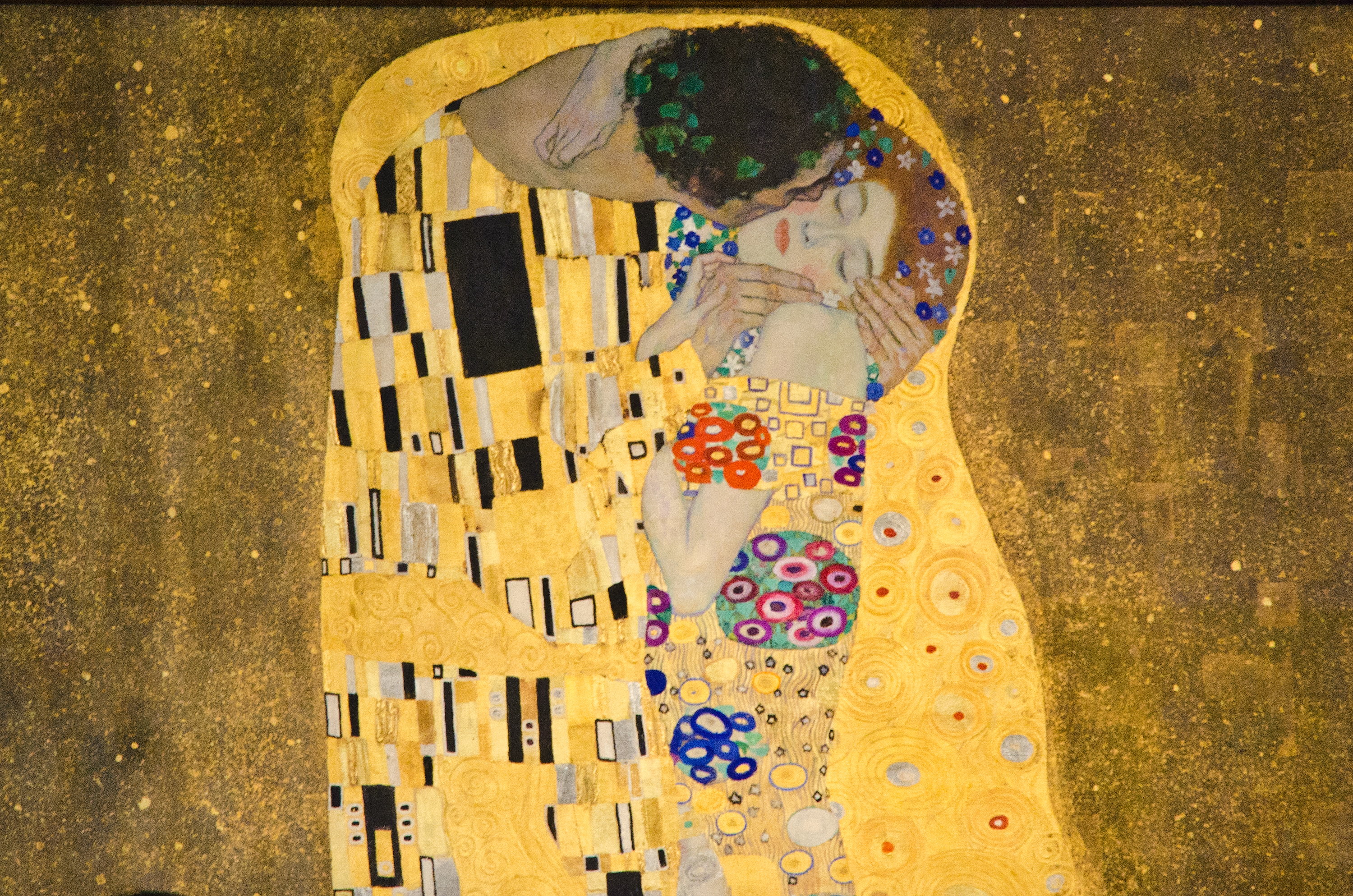
This picture is illegal in Scotland


This picture is illegal in Scotland.

What! Why?

Images of rape are illegal in Scotland.

But, you say, this is not an image of rape. It's a beautiful image of two people in love.

How do you know?

Rape is sexual behaviour which is not consented to. Yes, the woman in this image looks serene, happy. Anyone can put on a happy face. Scare her enough, and she'll look happy, if only to avoid whatever you've frightened her with. Coercion can take a wide variety of forms.

Consent isn't visible. Coercion isn't visible. There's nothing in a still image which can tell you whether consent was given, whether coercion was applied. If the woman in this image were holding a placard which read 'I consent', you could not tell by looking at it whether she had been forced to hold that placard. You could not tell whether the lettering on the placard had been photoshopped on afterwards.

So what does 'images of rape are illegal in Scotland' actually mean?

If it means anything at all, it must mean that some images of human sexual behaviour are proscribed. But which ones?

Some people like their sexuality full-on, physical, energetic, forceful, even ruthless. Some use rope, chain, bondage as part of their sexual repertoire. Some choose whips, canes, riding crops, floggers; some clamps, piercings, cutting, electro-stimulation. Pain. Some people prefer to have sex out of doors. Some, with others watching. It's not just the case that some people consent to these things: some - many - wouldn't consent to the sort of sex which is illustrated in high-school textbooks. There is no degree of apparent force, no accessory, no background to an image of human sexuality which cannot have been consented to.

I have a strong feeling that the images of sexuality that those who promoted this legislation meant to ban are these images of more forceful sexuality. The hand twisted in hair. The fingers digging into skin. The hand (as tonight's news tells us) on the throat. Perhaps. Probably. But possibly, also, some saw it as what it must inevitably become: a way of banning all portrayals of human sexuality altogether.

But actually, which is worse, which more undesirable? Is it worse that we tell some people that their chosen style of sexuality is unacceptable, or that we say that all images of sexuality should be banned? Are we really going to say, if you don't have sex like me, you're a pervert? Are we really going to say that, if you don't have sex only in the missionary position in bed at night with the lights off, your behaviour is so deviant that it cannot be portrayed?

When I was a young man, here in Scotland, homosexuality was a crime, punishable by imprisonment. It was also considered by some a disease, and psychiatrists seriously attempted to cure people of it. Now, in Scotland, it is recognised simply as a legitimate variety of human sexuality, and homosexuals may marry, if they so please, in church.

But sadism is still a crime. A masochist is not deemed able to consent to painful sexuality. Is this really what we, as a society, are comfortable with? Do we really want to condemn all sadists and masochists to living celibate lives, denying their sexuality? Do we, critically, wish to tell them that their chosen sexuality may not be portrayed?

Ah, you may say, but they're a tiny minority.

Well, maybe we (yes, I did say 'we') are. Maybe we aren't. I don't know. Probably, nobody knows. When homosexuality was illegal, most people believed it was very rare. Now that it's normal, we know that it isn't. How many bedside cabinets in Scotland contain a riding crop, a pair of handcuffs, a coil of silken rope?

If, as I assert, there is nothing you can see in a static image which cannot have been consented to, then the ban on images of rape either bans nothing (in which case there is no point to it), or it bans images which are visually indistinguishable from other images which are legal (in which case it's very close to arbitrary), or it bans all images of human sexuality altogether (in which case I would argue it's dangerously repressive).

There's a deeper point here. As a society we increasingly tell our narratives through visual media - through film, which is a sequence of still images. Narratives are how communities and cultures transmit values between generations. They are how we teach rising generations to understand what we as a culture see as right and wrong, acceptable and unacceptable. If rape cannot be portrayed, how are we to pass those values on? How can we have discourse about it? How is a young woman to know when to protest, no, this is wrong, I don't want this?

I do not impugn the motivations of those people who argued for and promoted this law. I don't say they were bad people. And I would not defend anyone keeping, for their pleasure or aesthetic interest an image which they knew or believed to be evidence of a real-world criminal assault. But I do argue this is bad law, bad law with bad consequences, and that it should be resisted and repealed.

Against Land Value Tax


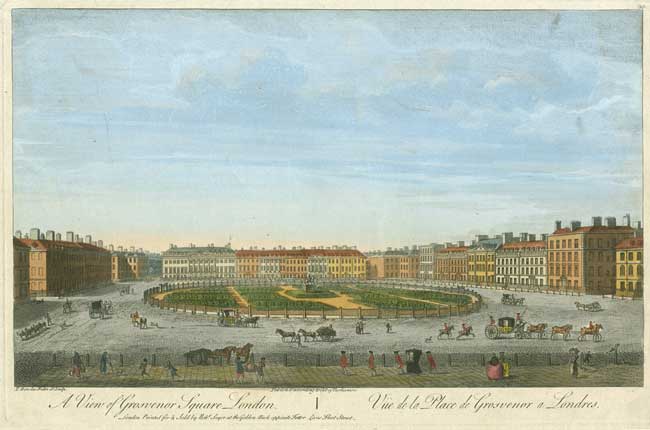
Gerald Cavendish Grosvenor is the richest Briton. How did he become so? It's not through intellectual effort - he has a grand total of one O level - nor is it through hard work or successful entrepreneurship.  He's a man startlingly lacking in personal achievement. No, his wealth is due entirely to the fact that he inherited a great deal of land in the west of London as well as Oxford, Cheshire and Scotland. But it's the London lands - Mayfair and Belgravia among others - that I particularly want to consider.

They've been in the family a long time. They were improved, it's true, by his ancestor Robert Grosvenor in the early nineteenth century. But essentially their current huge value is down to two things: first, the growth of London, to which the Grosvenors made no special contribution; and second, improvements in infrastructure - roads, railways, sewers and so on - that have been paid for out of the public purse.

This is the case for Land Value Tax. Landowners - like the Grosvenors - make windfall profits out of public works and out of pure luck. This is just one among many ways that the rich are rewarded purely as a result of being rich, and without making any reference to the desirability of the equable distribution of wealth there is a clear public interest in profits generated as a result of works paid for out of the public purse returning to the public purse.

Land Value Tax is a tax on the 'underlying' value of land, disregarding any improvements made by the land owner. It attempts to capture this increase in value which is not a consequence of the landowner's diligence. It's clearly a good thing.

So why is this essay against land value tax?

Land Value Tax is, in the first place, a misnomer. It does not tax land. Nor does it tax the value of land. It taxes a notional, uncertain element of the value of only some land. It imposes no tax on marginal lands distant from public infrastructure. And because that element of the value which is to be taxed is notional, it requires sophisticated assessment and is open to contest by people who by definition have access to the best, most devious accountants and lawyers in the land. In short, it would be an extraordinaily expensive and inefficient tax to collect, and would be the cause of interminable court-room battles fought at cost to the public purse.

But the chief issue about which I am concerned is land reform; at present, in Scotland, it is proponents of land reform who are promoting land value tax. And they shouldn't be; it is at best a distraction, at worst actively counter-productive.

Gerald Grosvenor's ancestors did not create the lands of Belgravia out of the void. Nor were those lands created with title deads attached. Rather, at some point in history some person siezed the land, excluding his neighbours. If stolen property does not become the property of the thief, nor does stolen land. There is not and can never be any title in land (polders in Holland excepted) which is not based ultimately on theft. I'm not defending the heritable, transferrable ownership of land.

There is a public interest in land being well managed, to produce food and timber and to maintain the ecosystem on which we all depend for our survival. Timber production, especially, needs consistent land management over long periods. Allowing individuals to manage a piece of land over a long period and to profit from the usufruct has proved over the period of recorded history to be an effective way of satisfying this public interest. But this is not and is distinct from the private, transferrable ownership of land. I would argue that the private, transferrable ownership of land is in all cases against the public interest, but that is what we now have and what we must work with.

There is no public interest whatsoever in allowing the very rich to cream profits as rents off the folk who have usufruct in the land. That is clearly an abusive practice which contributes to inequity in wealth. Nor is there any public interest in allowing the very rich to mismanage huge tracts of marginal land to facilitate the slaughtering of animals for sport. Somehow we must move from a position where six hundred and twelve people own half the land in Scotland to a position in which land is held either in common by the local community, or else as private land directly by the people who work it. To a Scotland in which those who aspire to produce food or timber from land can find land which they can work.

Land value tax does not address these issues. The land value tax on ten thousand hectares of remote highland estate is precisely nil. There is no incentive provided by the land value tax for the estate owner to divest themselves, to break up their estate into smaller holdings. Land value tax essentially subsidises grouse moors and deer 'forests'.

Land value tax on a thousand hectares of lowland arable is the same whether that land is held as one holding or as ten; but as one holding, there will be economies of scale, so again the land value tax militates against the breaking up of larger holdings into smaller ones.

Land should be taxed. Ownership of land is a good, and it's a monopoly, since only one owner can own any piece of land. Land owners, just by owning land, exclude others from the full enjoyment of that land. Of course it should be taxed. But land value tax goes about it in precisely - diametrically - the wrong way.

Land value tax discourages the use of the land on which the public has invested infrastructure. If oil refineries are to be built, it's in the public interest that they should be built near deep water ports and railways. If factories and warehouses are to be built it's in the public interest that they should be built near transport infrastructure. If the land which is appropriately serviced for industrial development is so taxed that there's no incentive for industrialists to use it, they'll build their factories elsewhere; which means the public expenditure on infrastructure will be wasted, and the overall efficiency of the economy will be reduced, benefiting no-one.

But it's worse than that. One of the problems Scotland now has is the overgrazing of steep hillsides, leading to loss of scrub, loss of topsoil, downstream flooding, degraded landscape and further problems. A land tax ought to discourage people from over-exploiting marginal lands. But under land value tax, valley lands, closer to public roads, will be taxed more, and hill lands taxed less, giving an incentive to farmers to move from lands which are suitable and convenient for grazing, but are taxed, to lands which are less suitable and less convenient but are not. In other words, land value tax will inevitably contribute to the further over-exploitation of marginal lands.

So is there a better solution? Of course there is.

A flat land tax - the same tax levied on every hectare of Scotland - would make it uneconomic to own marginal land. Landowners would not want to pay the tax, so the land would revert to common. Of course that raises the issue of the management of common lands, but I suggest that should be a matter for local community councils. At the same time, it would relatively subsidise - because tax far less - the economic use of land in which we the public have invested by providing infrastructure. Both those things are wins, and the reversion of marginal lands to common seems to me a very big win. It's also extremely cheap to collect. We know who owns every hectare of Scotland, so we know who owes exactly how much tax. Furthermore, as, if tax is not paid, land reverts to common, there's a very big incentive for landowners to pay the tax. The cost of collection would be minimal. Relative to land value tax, it's a very much better solution.

However, the flat land tax does not address the issue of large holdings. Fortunately, income tax already provides us with a model for how to deal with this. If you have a small amount of income, you currently pay a small proportion of tax on it. If you have larger income, you pay proportionately more. The same principle should apply to land tax: a larger holding should be taxed more per hectare than a smaller one. I've suggested, as a mechanism for this, an exponential land tax, because I think having a continuous scale (rather than the stepped one we currently have with income tax) produces fewer quirks and anomalies. But in any case, if larger holdings are proportionally more heavily taxed than smaller ones, there's a positive fiscal incentive to break up larger holdings into smaller units, and that's precisely what land reform ought to be setting out to achieve.

Of course neither of these proposals handles the issue of the undeserved windfall profits which acrue to a land owner when, for example, a road is built or planning permission is granted. I agree that there is a case in good old fashioned equity that that windfall profit should be captured for the public purse. I agree that the land value tax provides a mechanism for doing that. There are virtues in land value tax, I'm not denying it.

But it does not promote land reform, and those of us seeking to promote land reform should not allow ourselves to be side-tracked.

Friday, 24 May 2013

Cycle helmets, and road safety: a letter to the Lord Advocate


I've written about cycling helmets and safety a couple of times before. See 'Using, not losing, your head', and 'Lies, damned lies, and cycle helmets'. But more often, as you know, I write about things which relate to public policy in Scotland. Now, sadly, I'm having to combine the two topics.

In brief, in August 2011 a driver named Gary McCourt mowed down a 75 year old cyclist, Audrey Fyfe, on the Portabello Road in Edinburgh. She was killed. Nor was this the first time that McCourt had mown down and killed a cyclist; in 1985 he had been jailed for killing 22 year old George Dalgity.

McCourt stood trial this month for the death of Audrey Fyfe. He was sentenced to 300 hours of community service, and banned from driving for five years. In passing this remarkably lenient sentence, Sheriff James Scott commented that Audrey Fyfe "...was not wearing a safety helmet and that in my view contributed to her death."

Audrey was a very experienced cyclist, and like most experienced cyclists of her generation, she did not choose to wear a cycling helmet. As I've evidenced in the two posts I've referenced above, the evidence such as it is supports her in that choice: there is no conclusive evidence either that helmets significantly decrease the risk of injury to cyclists, or that they significantly increase it. There is a small correlation between increased rates of helmet wearing and increased (yes, you read that right, not decreased) rates of injury, but that's probably because the same fear factor which drives people to wear helmets also deters them from cycling at all, and we lose the 'safety in numbers' effect, rather than helmets actually killing people.

I'm not personally greatly in favour of custodial sentences, for any crime. But I do think that it should be automatic when a motorist causes injury or death to a pedestrian or cyclist, that they should be given at minimum a suspended life sentence, and, as a condition of its suspension, a lifetime driving ban. That way, they do not serve any prison time unless they are caught driving a motor vehicle again, but they know that, ever after, if they are found driving a motor vehicle, they will go to prison without the need for any further trial. If McCourt had been given a sentence of this kind on killing George Dalgity, he would not have killed Audrey Fyfe.

The Cyclists Touring Club are encouraging people to write to the Lord Advocate, urging him to appeal this over-lenient sentence. Here is the letter I have written:

As a matter of public policy, it is important to decrease the amount of car use in our cities, and to switch journeys from modes of transport which consume a great deal of energy and of public resources such as road space to those that do not. Further, there is a public policy interest in improving the general health and fitness of the population. Encouraging cycling fulfils both these aims. The main deterrent to increased cycling is the threat to cyclists from irresponsible and inattentive drivers. 
In the light of this, the decision of Sheriff James Scott to impose a non-custodial sentence as penalty for Gary McCourt's second killing of a cyclist is against the public interest and should not be allowed to stand. It is particularly notable that Scott cited Mrs Fyfe's lack of a helmet as a reason in his unduly lenient judgement. There is no evidence whatever that cycling helmets offer any protection in collisions with motor vehicles, and those who manufacture and sell helmets do not pretend that there is. They are designed to mitigate simple falls at low speed, and nothing more. The sheriff was therefore ill-informed, wrong and and prejudiced in his judgement. 
More importantly though, this fact had no bearing on the matter before him, namely the criminality of McCourt's driving. Hence he had no legal basis for referring to it when explaining his sentencing decision. 
Given McCourt's previous conviction I feel that a much stronger sentence should be applied, with at least a lifetime driving ban imposed.  
I urge you to appeal this unduly lenient sentence. 
Yours sincerely, 
Simon Brooke

May I encourage you to write one also?

Tuesday, 14 May 2013

Savings, and loans

This morning I got an email from a woman in the United States of America. She designs 'infographics', and does marketing. She's done an 'infographic' (left) about the size of homes in the USA. She has obviously done a quick web search to find people who blog about housing, and so she's mailed me. I don't think she's actually read my blog, if she had she might not have chosen it. But her 'infographic' does raise interesting issues. Note - I haven't verified her data is correct, but whether it is or not, the issues raised are the same. Before I go on to discuss these issues, I'd like to write a little about the text and subtext of her graphic, as I see them.

The text is obvious. Homes in the US are big - really big. Everyone has a big home. They're big in city centres, bigger in the suburbs, simply huge in the outer suburbs, still big in remote rural locations. They're also, claims the graphic, growing rapidly - the last panel claims the median home has grown in size by 50% in just twenty five years - interestingly, up to 2007, a date we'll come back to later.

The graphic shows, but doesn't explicitly say, that they're also staggeringly expensive. In New York, where the median size is apparently around 1500 square feet, the price is given as US$1295 per square foot, or about 1.9 million US dollars for an ordinary family house. That's not the extreme - Phoenix, Arizona is shown as even more expensive (why?!?). At the other end of the scale, housing in Dallas, Texas is stated to sell for US$59 per square foot, with a median size of 1650 square feet implying a price of just under a hundred thousand US dollars.

The subtext is less obvious. This is my interpretation, and my interpretation is subject to my own biases - which, if you've read this blog, you know. But the infographic was designed for, and advertises, a business called 'Quicken Loans'; their business is selling mortgages. The subtext seems to me to be, everyone else has a really big house. If you don't have a really big house, you're missing out. Borrow lots of money from Quicken Loans, and you too can have a really big house, like everyone else. And that seems to me, for most people, a really bad idea.

Of Size

OK, let's step back a moment, and talk about size. How much room do you need to have housing which is spacious and comfortable? This house (I've just measured it, to be certain, because I normally think in square metres) has 308 square feet of floor space. Of course, part of its feeling of spaciousness comes from the relative lack of internal partitions - the only one is the water tank cabinet that screens the bathroom - and the relative height: as I sit here typing this the ceiling is sixteen feet above the floor. Finally, of course, the latrine is outside, and adds effectively another sixteen square feet of floor space, or 324 total. Furthermore, this is Scotland. It isn't warm, and it isn't dry. You can't usefully use outdoor space - yard, patio, terrace, decking, whatever - to extend living space for many months of the year, as you can in much of the US. So that 324 square feet is not extended by any significant outdoor living
space.

This is, of course, strictly a one person house. I don't think I could comfortably share it, long term, with anyone else. But to produce a comfortable two person house, you wouldn't need to double it; for three or four people, you certainly wouldn't have to treble it. 

However, according to the graphic, the median home in the US has 800 square foot per person. That's more than twice what I have. More than twice what I need. Bigger homes? Really? What do you plan to put in them?

Of Energy

For equivalent levels of insulation, for an equivalent target indoor temperature, a bigger house needs more heating than a small one. Yes, of course you can do things with passive solar gain and so on to mitigate this, but they all scale with size - or rather, strictly, with surface area. A small house can have just as efficient solar gain and just as efficient insulation, area for area, as a large house, and if you double the floor area of a house, you substantially more than double the surface area - the area through which heat can be lost. So smaller houses are not just more efficient to heat because they're smaller, they're also more efficient to heat per square foot.

Of course the geometry of a house influences this. A circular house has less surface per unit area than a square one, and a square one has less surface per unit area than a long narrow one. But that's detail. The big picture is that a big house consumes proportionally more energy to heat than a small one.

And energy, for heating homes, is still primarily from fossil fuels. Burning fossil fuels introduces fossil carbon back into cycle, increasing the atmospheric burden of carbon dioxide and accelerating climate change. The alternatives are passive solar gain - but that works less well in winter, when it's needed most - or in-cycle carbon, which means firewood. Heating the average US home, according to Oklahoma State University, takes the production of about nine acres of hardwood forest. The USA has 313 million people in 114 million households but only 745 million acres of forest, so there simply isn't enough firewood to go round. So, in summary, bigger US homes inevitably mean more climate change.

Of Money

Which brings us around to money. The graphic doesn't give us a median price for a home, perhaps deliberately, but the US Census Bureau quotes US$186,000 as the median value of an owner-occupied home.  The median household income is quoted by the Census Bureau as US$52,000 (Ibid). That implies that the median house value (according to the census) is 360% of the median household income.

I said, earlier, that the date 2007, the date used as an indicator of median size increase in the graphic, was significant. Why? It's the year the subprime mortgage collapse really got going. What's a subprime mortgage? It's a mortgage where the borrower is under extreme financial stress - where any worsening of the financial conditions means that the borrower will not be able to repay. Of course, if one borrower  can't repay, their house is dumped onto the market, lowering the market price for housing locally and consequently increasing the negative equity, and consequently the financial stress - on neighbouring householders. Consequently, there tends to be a snowball effect - as the first borrowers fail to pay, and are foreclosed, more stress is placed on the next most vulnerable tier, who fail to pay and are foreclosed, and so on. 

This is what happened in 2007-2008. The collapse of the US subprime mortgage market lead to the collapse of major banks first in the US, but then, progressively, across the world. This had two consequences.

First, the whole world was tipped into a recession which we still, five years later, have no prospect of getting out of.

Second, governments around the world bailed out failing banks with simply vast sums of taxpayers' money. Enormous sums. Trillions of US dollars. Money taken, effectively, from ordinary taxpayers, and ending up, largely, enriching the already super-rich - including the same people who had profited from selling imprudent home loans in the first place.

What this boils down to is the fact that the whole economic crisis we're now living through, which has cost ordinary people across the world dearly, has ultimately been caused by people buying houses they can't afford.

Of Madness

You'll know, if you follow this blog at all, that housing isn't the only thing I write about; I also write about madness. In researching for my recent post on the new Diagnostic and Statistical Manual, I came across a startling fact. There is an extraordinarily high statistical correlation between borrowing and mental 'illness'. According to the Royal College of Psychiatrists, 'one in two adults with debts has a mental health problem, [and] one in four people with a mental health problem is also in debt'. There's particular evidence of strong links between mortgage debt, especially foreclosure, and madness.

Of Cost

I've shown evidence, in this essay, that housing debt is enormously costly to us all, both in terms of the larger economy and in terms of health. I've shown that larger houses are more costly in environmental terms than smaller houses. I've claimed - and reading through other articles in my blog will I hope persuade - that living in a well proportioned smaller house is perfectly comfortable.

The question is, what need a house cost? Well, I can answer that. I can answer that with confidence, because I've recently built (this) one. In its initial form, habitable but not yet comfortable, it cost £4,500; altogether, as it stands now, less than £7,000, or US$10,700 - and about three man months of my labour. A family home would cost about twice that, both in money and in time. Of course, that doesn't include the land. Land in an urban area with mains services inevitably costs. But, for example, it didn't take me much web searching to find a plot in Dallas, Texas for US$4,000. Interestingly, I was easily able to find plots in upstate (not urban) New York for much the same price. Very nice plots are available for around US$30,000. So the reasonable cost of a family home, including land, is somewhere between US$25,000 and US$50,000, and about six man months of labour.

Of Savings

There's a very big difference between the median price, according to the graphic, of US$100,000 for a comfortable house in Dallas, Texas, and the reasonable cost of US$50,000 for a comfortable house in Dallas, Texas. If you build your own small house simply and economically, that's a saving of at least US$50,000. To put it differently, for a Texan on median income, it's a saving of two whole years salary.

That's a lot.

It's even more in more highly valued areas of the US, since the price of 'building lots' doesn't vary nearly as much across the country as the price of completed houses.

If you can save that much, you may not need a loan. If you do need a loan, you'll need a much smaller loan, which you'll be able to pay off much more quickly and with much less stress. Furthermore, because your house cost less you are much less exposed to the risk of  rising interest rates, and, if house prices around you fall, of negative equity. You're at much less risk of foreclosure in the event of unemployment. Because you're under less stress, your health is likely to be better. And finally, as your smaller house is cheaper to heat and cheaper to tax, not only do you save on mortgage interest but you also save on other running costs. Win, win, win.

Of Reason

So if people in the US (and the same very much applies here in Scotland, too) could live comfortably in far cheaper houses than they do now, under far less financial stress than they do now, why don't they? The old myth - which I suppose some people still believe - is that a house is a safe investment, that buying a house is a good way to get richer. The other certain issue is status, the display of wealth, conspicuous consumption. People want to be seen to be successful, to be doing well, and I think this is perhaps especially so in the US. A big house is at least partially a way of advertising your success, and choosing a noticeably smaller house would perhaps be seen as 'being a failure'. That certainly seems to be the angle that Quicken Loans, sponsors of the 'infographic', are playing on.

But the housing crash of 2007-2008 should surely have shaken people out of the belief that houses are a safe bet. Of course, salesmen will be saying, now, that after the heavy falls of the past few years, they're bound to rise. They aren't. As I've shown, the current prices are about 200% - or more - of the reasonable cost. Ultimately, the price must fall to the reasonable cost, especially in the US where land is not inherently at a premium. That's the nature of the capitalist market. If you thought the crash of 2007-2008 was bad, baby, you ain't seen nothing yet.

Monday, 13 May 2013

On psychiatry, homeopathy, and the medicalisation of distress


I'm a damaged person; I know that. I know that that damage happened mainly in (and because of) my first six months of primary school. I know that because of that damage, I'm much more vulnerable to stress than most people are - or than I would be if I hadn't been sent to school. I'm now reasonably confident that I will carry this damage - this vulnerability - for the rest of my life, that I will never be free from the risk of another major breakdown, never free from little breakdowns such as the one I had last week.

In 1998, I broke my back for the first time. As I was driven in the ambulance to Ayr infirmary, I thought it was a foregone conclusion that I would be paralysed; in a wheelchair for the rest of my life. Suppose I had been right. Suppose I had had the spinal damage which would forever prevent me from walking again. Would you consider that an 'illness'? Would anyone?

The answer is clearly 'no'. There's no infectious agent. There's no underlying biological cause. It's damage. Something is broken. It can't be repaired. It's an injury.

My mental damage is not like a broken back. It doesn't permanently prevent me from doing anything. But it is like - it's very like - a shoulder that's been dislocated. A shoulder that's never been dislocated is pretty hard to dislocate: it's very strong. But once it has been dislocated, there's permanent damage to the soft tissue that binds it together. Most of the time the shoulder works well, moves smoothly and has the full range of movement it had before. But it's much weaker; if exposed to the wrong stress, it dislocates again. Again, this is not an 'illness'. There's no underlying biological cause. There's no infectious agent. Drugs may ameliorate the symptoms (pain, inflammation  swelling), but they won't cure the problem. There's damage - permanent damage. Something is broken. It's an injury.

For hundreds of years people with sincere good will, careful study and confident professionalism, have treated illness using homeopathy. We now know that this discipline is based on a mistaken model of the world: a model that denies the atomicity of matter, which assumes that no matter how much you dilute a solution, a proportion of the original solute remains. Because we know this, we know that despite the homeopathists' confident professionalism, their careful study and their sincere good will, the cures they prescribe are bogus. They can't work. And, because people in urgent need take their prescriptions in place of more scientifically grounded treatments, they actually cause harm.

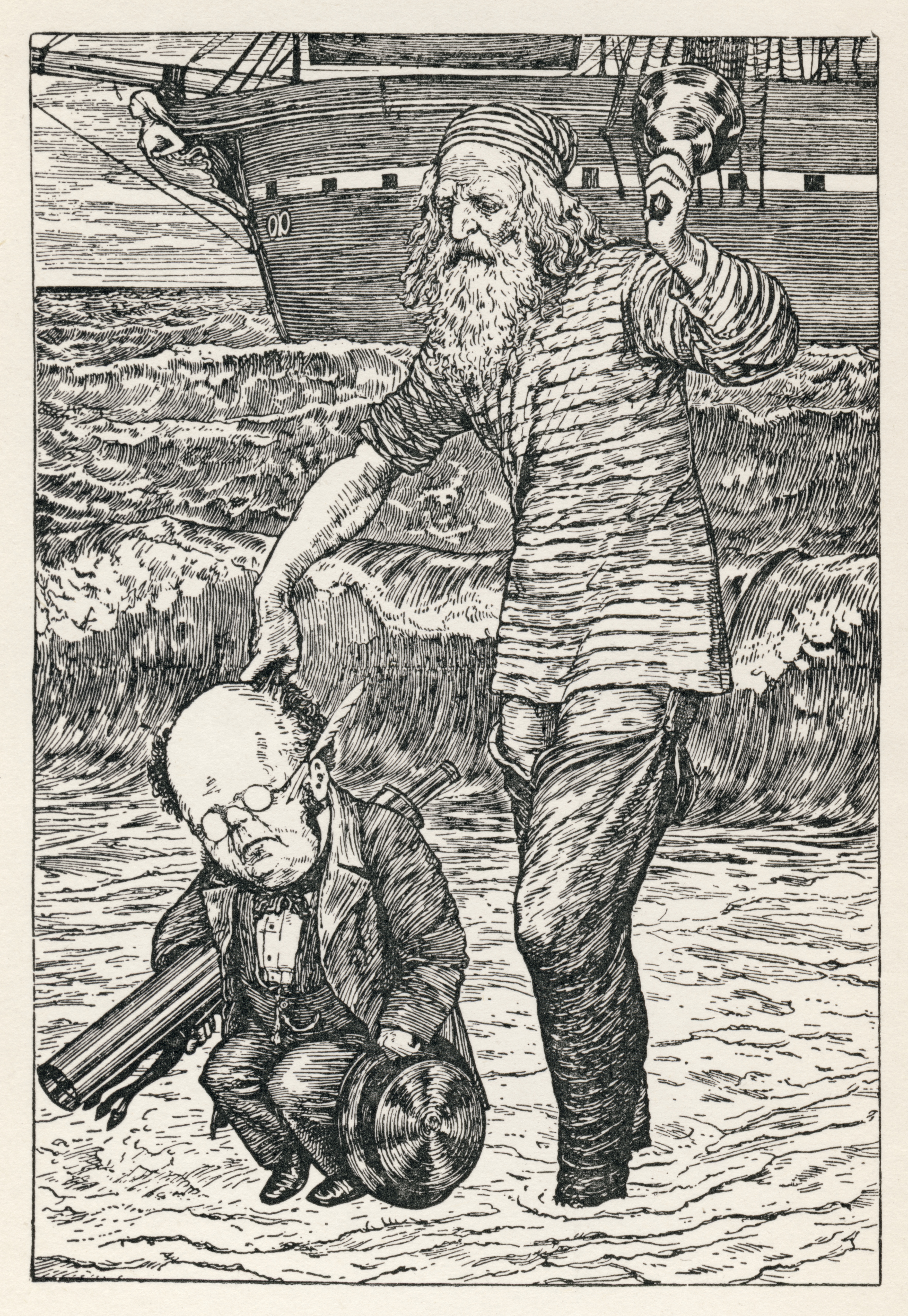
For hundreds of years people with sincere good will, careful study and confident professionalism have tried to cure mental 'illness'. They have prescribed drugs. They have hunted for the infectious agents, the underlying biological causes. As David Kupfer, Chair of the American Psychiatric Association committee responsible for the new edition of the Diagnostic and Statistical Manual of Mental Disorders, writes 'we've been telling patients for several decades that we're waiting for biomarkers...'. That's what you do with disease. You find the infectious agent, or the underlying biological process of the illness, and then you find a chemical compound - a drug - which will interfere with that agent or process. But the problem is, they have been hunting for a Snark. As Kupfer goes on to say '...we're still waiting.'

It's an article of faith for Kupfer as for all psychiatrists that there must be some underlying biological cause, because if there weren't, mental illness wouldn't exist. So they cannot admit that their Snark actually is a Boojum. That their entire profession is based on category error, just like that of the homeopaths. It's sad for them. I feel their pain. But they must be stopped, because like the homeopaths they actually cause harm because people in urgent need take their prescriptions in place of more scientifically grounded treatments.

It's time to consign psychiatry, like astrology and homeopathy, to the dustbin of scientific history, where it can do no more harm.

Saturday, 11 May 2013

Review: Unraveled, by Alda Sigmundsdottir


If I had written a review immediately I finished reading Unraveled, I would not have written this review. But I have been turning it over in my head for a couple of weeks...

The book is not what I expected. What did I expect? It's explicitly set against the background of the Icelandic kreppa, the meltdown of the banking system, and I expected that the events of the economic catastrophe would interweave with the collapse of the protagonist's marriage, acting, as it were, as a post-modern take on the pathetic fallacy. This doesn't really happen. The two collapses proceed at different paces and don't really counterpoint one another.

Again, the protagonist's husband is the British Ambassador to Iceland. As such he had to be involved in the most startling development in the whole economic mess - the British government's (almost certainly illegal) decision to declare the Icelandic banks 'terrorist organisations' in order to freeze their assets. I had expected the protagonist to see this as a profound betrayal, something which would completely overturn all trust and respect she had for him. Again, it doesn't really happen.

Would it have been a better novel if it had fulfilled my expectations? Read on.

This book isn't really a novel about the meltdown, despite what is says on the cover. The (economic) meltdown happens, but it happens in the background. It's scenery, not plot. And it isn't even, really, a novel about the breakdown of a marriage. It's a caustic retelling of the Cinderella myth.

Frida - the protagonist - is a girl from a poor background in Iceland. After a traumatic childhood, she escapes to London, where the course she had set her hopes on lets her down. In this vulnerable state, Cinderella - Frida - meets Prince Charming. He's rich, urbane, cultured, handsome, beautifully dressed, twice her age, and called - naturally - Damien. Damien, for me, didn't ring true for the first several chapters he inhabited. Filtered through Frida's eyes, he seemed a cardboard cut-out emotionally cold English aristocrat, almost a Fifty Shades of Grey character. But as Frida's own understanding and perception develops through the narrative, suddenly one sees why this sophisticated man would choose to marry a young woman at such a low ebb: he wanted someone malleable, whom he could mould, Pygmalion-like, into a perfect wife. This revelation is chilling, and makes the character of Damien more believable, if not more likeable.

But this isn't a book about Damien. It's a book about Frida, and Frida's is a delicately and beautifully drawn portrait; she's a very fully realised, believable and - yes - likeable character. It's a book about Frida's growing up, a growing up which is delayed from her broken childhood and through the frozen years of her dysfunctional marriage, to flower quite suddenly against the stark background of Iceland's west fjords. And it is an interesting detail, I think indicative of the construction of this text, that the incident which sets her free to flower is a mistaken inference.

I'm not sure, now, whether or not the failure to use the obvious counterpoint in a more formal way is a deliberate choice - 'I could do this, but I shan't' - I'm interested. It's not the choice I would have made. It isn't the novel I expected. But that does not make it a poor novel. On the contrary, it's a very fine portrait of a woman coming of age, and well worth reading for that.

Creative Commons Licence
The fool on the hill by Simon Brooke is licensed under a Creative Commons Attribution-ShareAlike 3.0 Unported License